
Overview
Advance discovery. Bridge science and society. Lead the bio-driven future.
The Master of Science in Biotechnology at UCSI University is designed for aspiring professionals ready to push the boundaries of innovation across healthcare, agriculture and sustainability. Blending advanced scientific knowledge with industry relevance, the programme immerses you in the molecular, cellular and computational dimensions of biotechnology — preparing you to solve real-world challenges with precision and purpose.
Whether you're engineering microbes for greener biofuels, developing new tools in molecular diagnostics or optimising fermentation processes for industry, this programme equips you with the skills to thrive in both research and commercial settings. If you're ready to lead in the era of the bioeconomy, this is your next step.
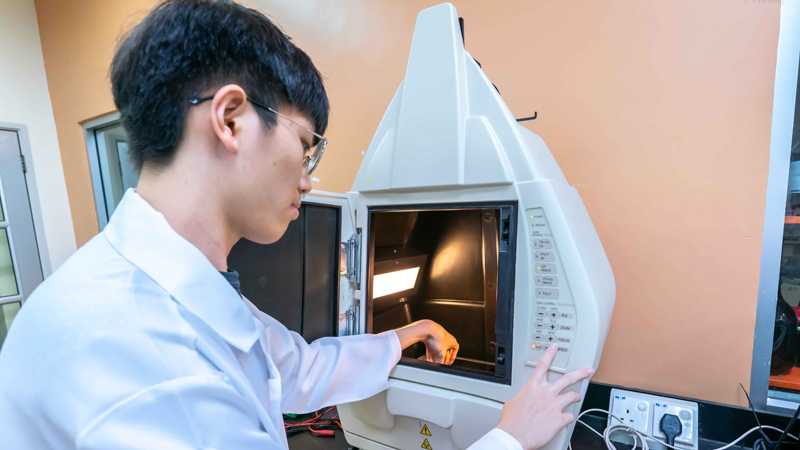
The MSc Biotechnology at UCSI University is a comprehensive, coursework-driven postgraduate degree that offers a deep dive into the evolving landscape of modern biotechnology. The curriculum combines core scientific modules with applications that span healthcare, biomanufacturing, environmental sustainability and bioinformatics.
Students gain mastery over key areas such as molecular biology, bioprocess engineering, genomics, advanced microbiology, fermentation and downstream processing, and computational tools in biological research. This multidisciplinary training is supported by an industry-aware approach that emphasises the translation of lab research into scalable, impactful solutions.
What sets this programme apart is its balance between theory, hands-on experimentation and applied research. The coursework provides structured learning across cutting-edge biotechnology topics, while the research component allows students to undertake independent projects aligned with current industrial needs — from personalised medicine and vaccine technology to environmental bio-remediation and functional foods.
Throughout the programme, students interact with experienced academics and researchers, gaining exposure to real-world case studies, seminars with industry leaders and collaborative opportunities with UCSI’s research centres and industry partners.
Assessment methods include lab-based evaluations, data-driven assignments, literature reviews, project proposals, oral presentations and a research dissertation. These components are designed to cultivate advanced technical expertise, critical thinking skills and scientific communication.
Graduates emerge as highly skilled biotech professionals ready to contribute in R&D, biomanufacturing, clinical research, agri-biotech, regulatory affairs or science-based entrepreneurship. The MSc also provides a strong foundation for those pursuing a PhD or leadership roles in biotechnology-related industries and policy sectors.
Academic Requirements
Bachelor’s Degree
- A Bachelor’s degree (Level 6, MQF) in a related field with a minimum CGPA of 2.75, or its equivalent, as accepted by the HEP Senate; or
- A Bachelor’s degree (Level 6, MQF) in a related field with a minimum CGPA of 2.50 but less than 2.75, or its equivalent, may be accepted subject to a rigorous internal assessment; or
- A Bachelor’s degree (Level 6, MQF) in a related field with a CGPA of less than 2.50, or its equivalent, may be accepted subject to a minimum of 5 years’ working experience in a relevant field.
- Candidates with a Bachelor’s degree (Level 6, Malaysian Qualifications Framework) in a science discipline not directly related to the programme, with a minimum CGPA of 2.75 or its equivalent, as accepted by the HEP Senate, are required to enrol in and successfully complete bridging course(s) upon admission. These courses are intended to ensure that candidates acquire the necessary foundational knowledge relevant to the programme.
English Language Requirements
- IELTS: 5.5
- MUET: Band 4
- TOEFL (iBT/Essentials): 46/8
- Pearson Test of English: 51
- Cambridge English Qualification and Tests: 160
- Certified Intensive English Programme by ELS: 108
- Master Research Project Planning and Proposal Presentation
- Research Methodology for Scientists
- Academic Communication
- Molecular Cell Biology and Genetics
- Experimental Biotechnology – Method and Instrumental Design and Analysis
- Master Research Project I
- Current Topic in Biotechnology
- Bioinformatics and Computational Biology
Major Electives (select one)
- Trends in Medical Biotechnology
- Applied Bioprocessing
- Advances in Agriculture Biotechnology
- Master Research Project II
Major Electives (select one)
- Trends in Medical Biotechnology
- Applied Bioprocessing
- Advances in Agriculture Biotechnology
Free Electives (select one)
- International Business and Management
- Human Resource Management
- Marketing Management
Examples of research areas:
Targeting KRAS: Designing and validating a G13D DNA aptamer in silico.
Green remedy: Investigating Basella alba for cholesterol and obesity control.
From farm to formula: Turning agri-waste into citric acid-crosslinked hydrogel.
This programme promotes and nurtures lifelong scholarship and deep learning for career and personal advancement which enhances employability and other inter alia skills in the challenging Biotechnology field. Overall, biotechnology postgraduates can embark into their careers in the medical, health, food and beverage, wine, agricultural, chemical and environmental industries or into any Biotechnology-related PhD programme or be entrepreneurs upon completion of this programme.
Local Students
Approximate Total Fees:
(without bridging course)
RM 41,512
(with bridging course)
RM 49,792
International Students
Approximate Total Fees:
(without bridging course)
RM 60,827
(with bridging course)
RM 71,037
Note:
- This is an estimated fee, as different countries have different visa processing charges and administrative fees. For more information, kindly refer to your region’s counselor for the detailed fee breakdown.
- In accordance with the Malaysian government tax regulation, effective 1st July 2025, a 6% service tax will be imposed on non-Malaysian citizens.